
We Are Here.
This newsletter is neither late, nor behind schedule. That’s what I try to tell myself. There is no schedule besides the intention to publish some words and a few links once a month. The effort might be my life’s work but it’s not my job; not how I make my living. Rather, I consider this project an opportunity to gather my wits by curating resources that others might find interesting or useful. Why put that on a schedule?
The other thing is that the world is on fire right now. (Yes, but when has it not been in the last 5-10 years?) I mean, we’re witnessing a global superpower actively spurn and mock its allies in favor of a previously presumed adversary. Raising the question of “whose side are you on?” becomes a dicey proposition and we have to brace ourselves for answers which may have little basis in truth or evidenced reality. I know, I’m speaking in broad generalizations here, not naming names. That, too, is a choice.
Given all this, it’s a challenge to decide where to place my energies for this once-a-month missive. Which crisis first? Which urgency applies to more people? What important theme will I have to leave unmentioned? Wrestling with these questions has also emerged as a part of the process of finally getting words on the page. Thanks for your patience.
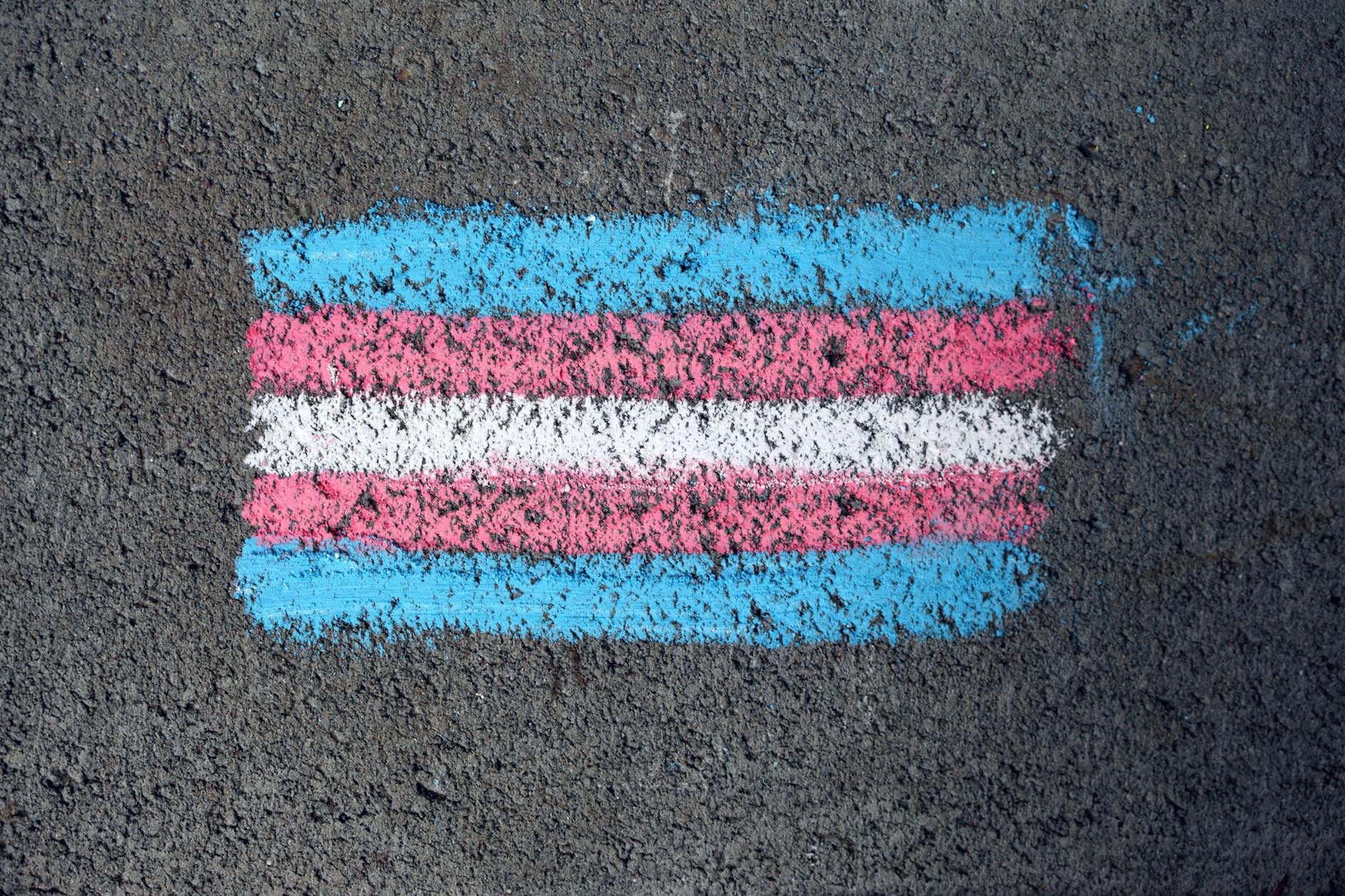
Trans lives are not up for debate. Cis folks, it’s time to listen.
“A lot of people think you have to have dysphoria to be trans, but in most circles it’s more about what euphoria we can bring to others and bring to ourselves. Using the right pronouns and name can be a source of euphoria. Transmasculine people getting binders, or starting T and seeing their voice starting to drop, is definitely a source of trans joy. Being able to see that in others and cultivate it is a source of great positivity despite all the things that are happening outside the community.” —K.C., 17, he/they, New Jersey
A trans voice close to home
At my school recently, faculty had an opportunity to hear from a middle school student who identifies as trans. As a follow-up, I asked him about the experience in a short interview (lightly edited for length and clarity).
Sherri: I’m curious, what made you decide that you wanted to speak to faculty?
E: Well we had Service Learning groups and I was in a group called “I belong” and we each had a chance to do our own individual projects and so I wanted to do something very personal to me and of course my transition was one that came up in my mind. I kind of tried other things just about gender in general and I found the one I could most likely do. Of course was one about being trans or non-binary and how it’s affecting school life, so I decided on that.
I decided a poster or just like a little announcement wouldn’t be enough to talk about a very very unknown and sensitive topic so I thought something a little more personal would be good. So I thought a presentation would be the best.
I also talked with Miss Dailey a little and she helped me come up with ideas for what I wanted to talk about in the presentation.
Sherri: Cool. Were you nervous when you finally had the opportunity to maybe talk to the whole middle school, or middle and high school faculty?
E: Strangely, no. I had a little, of course, but I knew everybody at the school was very supportive so that helped me not worry about hecklers or anything. I’m not that nervous with public speaking especially when you know [people] are going to be a little more lenient on me because I’m younger so it helped with that and I know a lot about the topic even. Not just being me but also there’s a lot on this topic and I just am very interested in it so I already knew most of the facts; I didn’t have to research them or worry about speaking it wrong.
Sherri: My next question: What are three main takeaways that you hope people left your talk with?
E: I hope people left my talk with some tips on how to make just their general vocabulary more gender inclusive. One of the teachers I’ve noticed, he used to say “ladies and gentlemen” quite a bit and now he’s just been saying “everyone” or “class” or stuff like that and I’ve noticed that the shift.
I’m hoping, second, that people understand a little more about being trans and what I went through personally, and three, I hope that people aren’t afraid to ask a little more questions to trans people because of how open I was. I’m hoping they won’t see [it] as mostly a very sensitive topic for them to talk about and be a little more open because it’s just another experience that most people don’t have. It’s like, I don’t know, people who can or can’t do a cartwheel, is just for some reason very sensitive.
Sherri: What sort of questions did you experience during the Q&A? How did you find that?
E: The Q&A. I actually was surprised with how much engagement there was, but the question that got most was like ‘how can I help?’ or ‘how can we as a school do?’ which I appreciate if I can recall some … Or ‘Are there any tips you would give to a student if there was another trans student in sixth grade? What would you say to them?’ or like ‘Is there anything that teachers can do to make a trans student feel more included?’ and stuff like that and I would go into a little more depth then I did on just the slides.
Sherri: Is there anything you would want to share with educators whom you don’t know?
E: Well, I’d say if you do have a trans student at your school, it’s great to ask them questions; not too personal, or do research on your own especially if that trans student is just recently transitioning. Because even with a lot of support, it can be a very tough time mentally, so if they could read articles, I know it’s not my presentation, but it’s still good enough. Seeing what educators can do in general with the school can help make a positive impact. The beginning of the transition is the most fragile part.
Sherri: Thank you so much!
Additional resources
I encourage us all to listen to trans youth whenever and wherever we have the opportunity.
Here are some recent resources I think are worth considering:
“How Trans Teens Are Dealing With Trump 2.0, in Their Words” by Anya Kamanetz To gain perspectives on how young trans people in the US are managing the devastating attack on their rights, Kamanetz spoke with teens in different parts of the country about their hopes and plans.
The video below is an update on a trans kid who was first interviewed in middle school and is now 16. ( I will also say that whiteness and a clearly feminized appearance contribute to the appeal of this particular profile. If you find a comparable piece on a trans or nonbinary student of color, please share it!)
Scarleteen is queer-friendly sex education website designed for young people. Two of their regular contributors, Heather Corinna and s.e. smith, put together a survival guide for the 1st administration and now updated it for the 2nd go-round of the tangerine tyrant. The section highlighted here is specific to LGBTQ+ identities but the whole guide offers resources and actionable ideas for a wide range of identities.
There’s so much we can do!
In all of these resources, I hope you’ll see avenues to pursue what my young interview partner suggested: getting curious and reliably informed – best by members of the affected community. As educators we must recognize that trans and nonbinary people are among our students, colleagues, the families we serve -whether or not they are out and known to us. When we actively cultivate learning and meeting spaces that are deliberately inclusive, we build environments that affirm rather than harm community members in our care. We often claim those as priorities, yet the evidence may not be as clear or consistent to those on the edges of dominant culture as we would like to believe.
As a start, consider these gender neutral ways of addressing students or other adults: friends, folks, people, colleagues, scholars, athletes, musicians, community members, everyone, everybody, all…
At the risk of overstepping the bounds of polite attentional expectations, I feel compelled to add a few more readings you may find helpful in the coming weeks and months. I also apologize for the extreme North American focus this month but alas, there are reasons (gestures wildly).
- Eve L. Ewing just released a new book, Original Sins, which talks about the education of Black and Indigenous children in the US as a function of white supremacist nation building. Read this interview with the author to learn more.
- Ever wonder why tech outlets like Wired are doing some of the best political coverage in this moment? Here’s an op-ed by the folks at Tech-Dirt to explain.
- finally, a bit of good news. On Feb. 28th, much to my surprise, I won a local poetry slam. In the final round, I plied my audience with a piece about “breakfast forever” and closed with poem I composed the day of: “Extremists have taken over the government“
I wrote and have to believe: We will win.
Friends, this concludes the March edition of Bending The Arc over here on WordPress. (I’m still not entirely happy with the appearance and welcome assistance in shaping it more to my liking.) But more importantly, we’re not on Substack which supports literal Nazis. Again, choices.
I hope you are gliding into this next season with calm, ease and collective action.
Be well,
Sherri


 Bending The Arc
Leave a comment